
 Deutsch
ROVER 12hp / 14hp
Tests and Reports
1919 - 1924
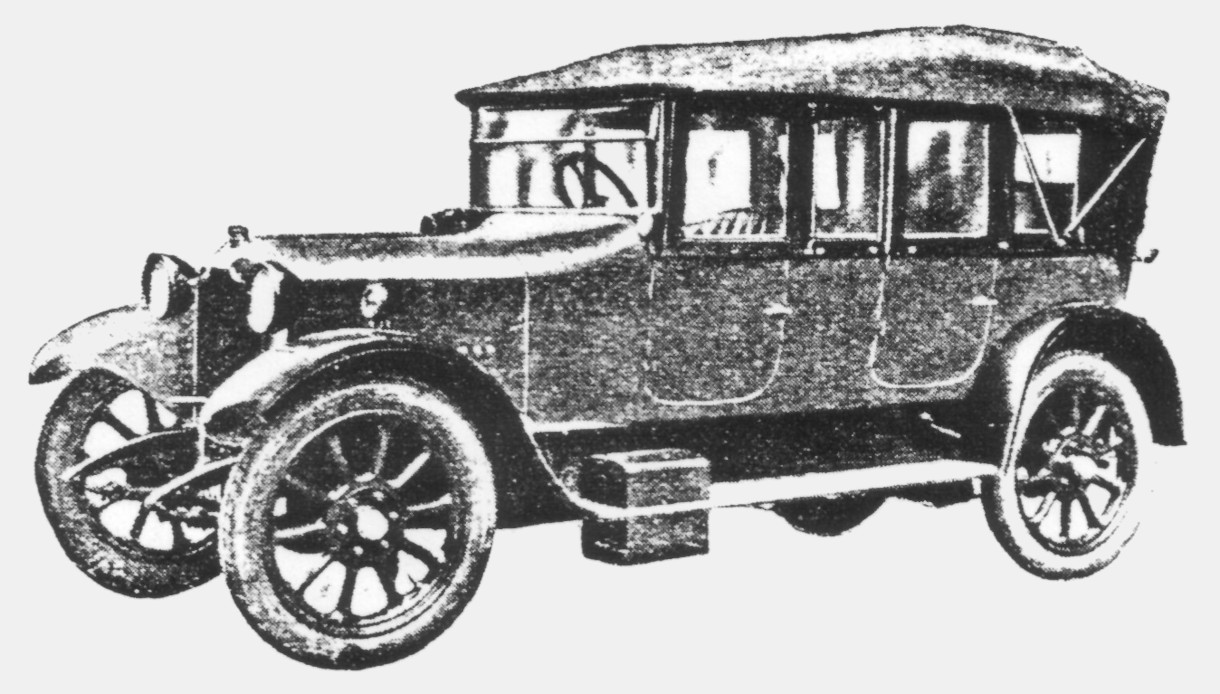
The English magazine The Motor published a test of the ROVER 12 h.p. 4/5-Seater Tourer in its issue of 29 May 1923. It gives a good overview of the car. The attached images of the test are attached.
The 12 h.p. ROVER in Test
A Substantial Four-Seater
In the issue of The Motor of February 6th we described a test of the two-seater 12hp Rover. Recently, we had the four-seater model on the road, which enables some additional comments to be made.
The outstanding features of this well known car, which has had an exceptionally long run of popularity with only minor alterations, are its solidity and general comfort. The springing is above the average of cars of this type: the engine is quiet and tractable. Gear changing involves no skill: the clutch is light and akes up the drive sweetly: while the brakes inspire confidence, a very light pressure on the hand lever being sufficient to bring the car to rest on the steepest gradent, even one like that of Westerham (1 to 6½).
Excellent Petrol Consumption.
We are interested to find that, with this particular car, which had only run 500 miles, the petrol consumption worked out at 25 m.p.g, attributable, no doubt, to making use of the jet control of the S.U. carburetter fitted. A lever on the steering wheel which opens or closes a jet orifice, enables the driver to enrich or weaken the mixture at will. This is really a great convenience, because, properly used, it affords a little extra power in ascending a hill, or in getting away after a stop, while under favourable conditions it enables the consumption to be cut down materially, with consequent economy.
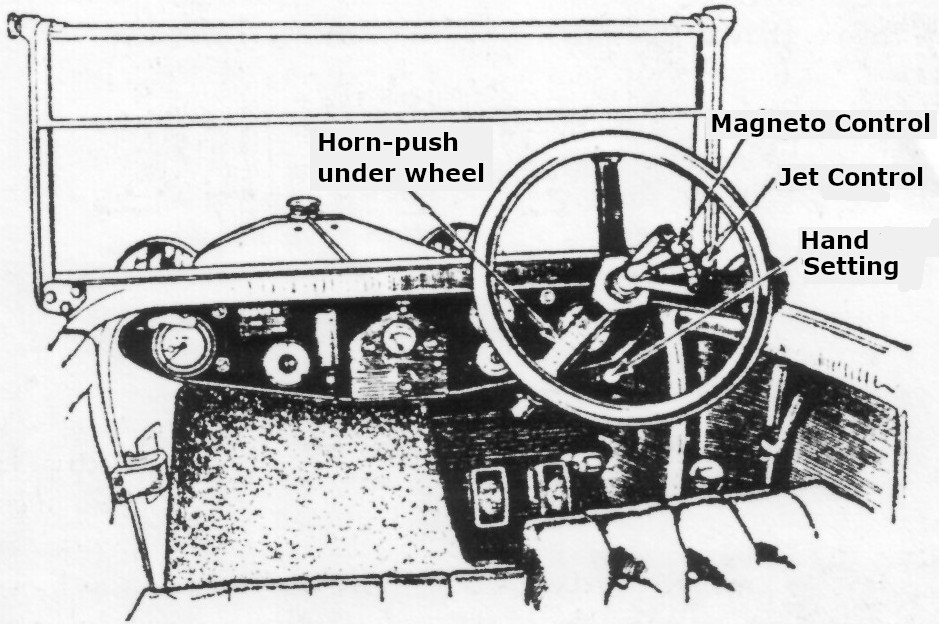
The Dashboard of the ROVER 12 h.p.
Another good idea is the hand setting interconnected with the accelerator pedal, which is provided by a pull-out ratchet under the dash. By opening this slightly, and giving a mixture a little on the rich side, by means of the control lever, the engine starts readily from cold when the Lucas starter is put into operation, without having to lift the bonnet or to flood the carburetter. After a few moments‘ running the mixture can be weakened and the hand setting partially closed.
Another detail with which we were impressed was the side-curtain equipment. The celluloid panels are mounted on rigid frames and open with the doors, and when all are erected the interior is very cosy and free from draughts. On each side are spring-closed panels, through which an arm can be pushed to give traffic signals. When not requires, the curtains are stowd away in a cupboard behind the front seats.
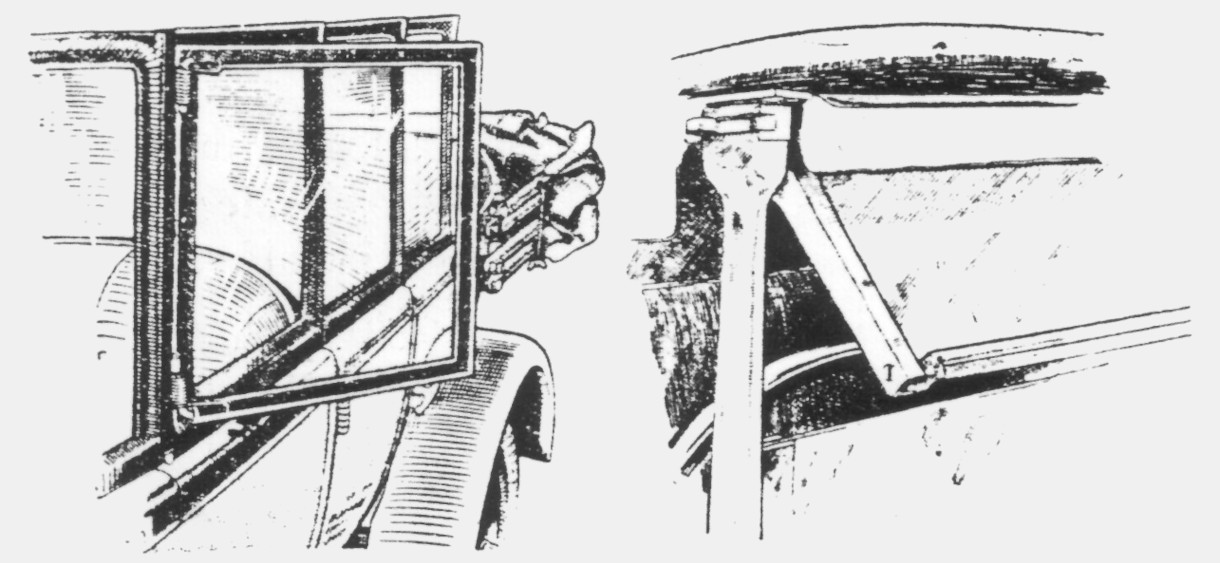
Left: The illustration shows the spring-loaded side window of the all-weather covering, through which the driver can give traffic signals.
Right: The illustration shows the airtight attachment of the soft top to the frame of the windscreen and the rain gutter on the upper part of the transversely split windscreen.
With a full load we found that the speed of the car was a trifle less than that of the tw-seater model, the maximum being slightly in excess of 45 m.p.h., with a very comfortable touring speed of from 35- 40 m.p.h.
In all respects which make a car roadworthy the Rover is excellent, and with a chassis co substantial, and an engine which is reasonably flexible, one has a vehicle for which a long life with very little trouble would justifiably be anticipated.
One very notable feature is the method of carrying the tools, which are disposed in chests in the pockets of the rear doors, neatly arranged so that any one required is readily found by lifting up the flap which covers them. For the heavier articles, like the jack r inflator, a receptacle is found in the triangular footrest of the rear compartment. Thus, one would never have to disturb the passengers to change wheel or carry out any adjustments.
Rover cars are supplied in a variety of attractive shades, with antique leather upholstery in a colour to harmonize. The finish is excellent, the upholstery being carried up round the sides: seat cushions and squabs are sprung and of the right contour to afford comfort on a long journey. The hood is of black waterproof material, which, with the side curtains in position, gives the exterior view of the car the appearance of an enclosed body. Quite a neat idea, also, is the way the hood snaps on to the top of the windscreen frame. It does not take more than a few minutes to erect single-handed. Both panels of the windscreen open outwards, the top half having a rain gutter.
The manufacturers are the Rover Co., Ltd., Coventry; London show-rooms at New Bond Street.
© 2021-2026 by ROVER - Passion / Michael-Peter Börsig